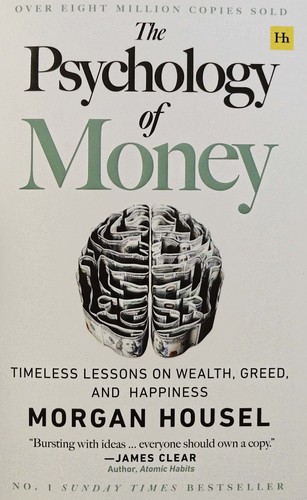
⏱ The book in 1 minute
- Doing well with money depends more on behavior than on intelligence or technical skill.
- Your personal history shapes how you see risk, so other people's money choices make sense to them even when they look crazy to you.
- Saving is a habit you can control, and compounding rewards those who stay in the game the longest.
- The real value of wealth is freedom, meaning control over your time and the ability to say no.
- Leave room for error, aim for reasonable instead of perfectly rational, and know when you have enough.
The big idea
Morgan Housel argues that how well you do with money depends less on intelligence, math skills, or financial knowledge than on behavior: patience, humility, how you handle fear and greed, and whether you know when you have enough. Each person's financial choices are shaped by their own experiences, era, and luck, so decisions that look irrational from the outside often make sense from the inside. Over 20 short, story-driven chapters, he shows that lasting wealth usually comes from saving consistently, avoiding ruin, leaving room for error, and giving compounding decades to work. The real reward is not luxury but control over your own time.
Key ideas
Your experiences shape your money beliefs
People who grew up during high inflation, a booming stock market, or a recession form very different instincts about risk. Nobody is crazy; everyone is working from a small, personal sample of how the world works. Before judging someone's money choices, or your own, ask what experiences sit behind them.
Luck and risk are two sides of the same coin
Outcomes are never purely the result of skill or effort. The same decision can lead to a fortune or a disaster depending on forces nobody controls. Be cautious about copying successful people, and equally careful about condemning failures. Study broad patterns instead of single dramatic cases.
Staying wealthy is a different skill from getting wealthy
Getting rich often involves risk-taking and optimism. Staying rich requires frugality, humility, and fear of losing what you have. The top priority is survival: avoid any bet that could wipe you out, so compounding can keep working for decades.
Time is the engine of compounding
Most of the fortunes the author describes grew because they had a very long runway, not only because returns were exceptional. Modest results held for a long time beat great results that are interrupted. Consistency matters more than brilliance.
Real wealth is what you don't see
Expensive cars and houses show spending, not wealth. True wealth is the money you chose not to spend, which turns into options and security. Saving does not need a specific goal; it buys flexibility for a future you cannot predict.
Freedom is the highest dividend money pays
Being able to decide what you do with your time, and with whom, is strongly tied to well-being. Use money to buy independence, not to impress others, because most people notice your possessions far less than you imagine.
Aim for reasonable, with room for error
A plan you can stick to emotionally is better than a theoretically optimal plan you will abandon in a panic. Build in a margin of safety, expect surprises, accept that market volatility is the price of returns, and recognize that your goals will change over time.
A real case
One of the real examples the book uses, told in our own words.
The Janitor Who Died a Millionaire
Housel opens with Ronald Read, a man from Vermont who spent decades pumping gas and working as a janitor. He lived quietly, drove used cars, and never drew attention. When he died in 2014, his town was stunned to learn he had left behind a fortune of several million dollars, most of which he gave to a local hospital and library. His method was simple: he saved what he could, bought shares of solid, well-known companies, and held them for a very long time. Housel sets him next to Richard Fuscone, a Harvard-educated Merrill Lynch executive with every professional advantage. Fuscone borrowed heavily to fund a lavish lifestyle, including a huge home, and when the 2008 financial crisis hit, he was forced into bankruptcy. The contrast is the core of the book: one man with no special training built lasting wealth through patience and restraint, while another with elite credentials lost it all through leverage and overspending. Finance, Housel argues, is one of the few fields where this kind of reversal is common.
What it teaches: Patient, modest behavior can beat education, income, and expertise when it comes to building wealth.
Chapter-by-chapter summary
Introduction: Why behavior beats knowledge
Housel sets up the book's premise: financial success is a soft skill, closer to psychology than to physics. He contrasts a modest worker who quietly built a fortune with a highly educated finance executive who went broke, showing that habits can outweigh credentials.
1. No One's Crazy
People's views on money come from the specific economic conditions they lived through. Someone who lived through a crash sees stocks differently from someone who only saw a bull market. Many choices that seem foolish, such as buying lottery tickets, make sense within the buyer's own reality.
2. Luck & Risk
Results are shaped by forces bigger than any individual. Housel uses Bill Gates's rare early access to a computer, alongside a gifted classmate who died young, to show how luck and risk work in both directions. The lesson: give credit and blame carefully, and focus on general patterns rather than extreme stories.
3. Never Enough
Some of the most dangerous financial decisions come from people who already had plenty but kept moving the goalposts. Knowing when you have enough, and refusing to risk what you need for what you merely want, protects you from ruin.
4. Confounding Compounding
Warren Buffett's fortune is explained largely by investing for an extraordinarily long time; most of it came late in his life. Compounding is counterintuitive, so people underestimate it. Good returns you can sustain matter more than chasing the highest ones.
5. Getting Wealthy vs. Staying Wealthy
Making money and keeping it require different mindsets. Survival comes first: avoid leverage and bets that can wipe you out. Housel recommends being optimistic about the long term while staying paranoid about the short-term events that could knock you out of the game.
6. Tails, You Win
In investing, business, and careers, a small number of events drive most results. You can be wrong often and still do very well if a few decisions are big winners. Expecting many failures is normal, not a sign that you are failing.
7. Freedom
Control over your own time is one of the strongest predictors of happiness. Money's greatest value is giving you the ability to choose what you do each day. Modern knowledge work makes that autonomy harder to find, which makes financial independence even more valuable.
8. Man in the Car Paradox
When we see someone in a flashy car, we picture ourselves in it rather than admiring the driver. Possessions rarely earn the respect people hope for. Kindness and humility do more for how others see you than visible spending does.
9. Wealth is What You Don't See
Rich and wealthy are not the same thing. Income spent on visible goods is gone, while wealth is the unspent money that remains invisible. Because we can't see other people's savings, we tend to copy their spending instead.
10. Save Money
Your savings rate is something you control more than investment returns. Saving needs no specific purpose; it is a cushion against surprises and a source of flexibility. Lowering your ego, and therefore your need to spend, is one of the most effective ways to save.
11. Reasonable > Rational
Pure rationality ignores the fact that we are emotional people. A strategy that lets you sleep at night and stay the course is better than a coldly optimal one you will drop under stress. Liking what you invest in increases the odds you will stick with it.
12. Surprise!
History is a poor map of the future when it comes to money, because the biggest events are usually unprecedented. Use the past to understand general behavior, like greed and fear, rather than to forecast specific outcomes. Recent history is often more relevant than distant history.
13. Room for Error
Leave a margin of safety in your plans: savings you can fall back on, conservative assumptions, and no single point of failure. Room for error lets you survive a wide range of outcomes and stay in the game long enough for the odds to work in your favor.
14. You'll Change
People are bad at predicting how their goals and tastes will shift. Long-term plans should avoid extremes, since extreme choices are the ones you are most likely to regret. Accept that changing your mind is normal and avoid sunk-cost thinking.
15. Nothing's Free
Market volatility, uncertainty, and doubt are the price you pay for long-term returns. If you treat volatility as a fee rather than a fine, you are less likely to sell in a panic and miss the gains.
16. You & Me
Investors play different games with different time horizons. A short-term trader and a long-term saver can rationally pay very different prices for the same asset. Problems start when you take cues from people playing a game that isn't yours, which helps explain bubbles.
17. The Seduction of Pessimism
Pessimism sounds smarter and gets more attention than optimism, even though progress usually wins over time. Setbacks happen quickly and are visible, while growth is slow and easy to miss. Being aware of this bias helps you stay invested.
18. When You'll Believe Anything
When the stakes are high and we want something to be true, we fill gaps in our knowledge with stories that match our hopes. Everyone has an incomplete view of the world, so stay humble about what you think you understand.
19. All Together Now
Housel gathers the book's lessons into practical guidance: stay humble when things go well, avoid ruin, save, plan for things going wrong, aim for independence, give yourself long time horizons, accept volatility, and define your own game.
20. Confessions
The author explains how he manages his own money. He prioritizes independence and sleeping well over maximizing returns, keeps a large safety cushion, and invests mostly in low-cost index funds for the long term, while acknowledging that this approach fits his personality and may not fit everyone.
Postscript: How American consumers got here
A short history of the U.S. economy since World War II, explaining how shifts in income, debt, and expectations shaped the way American households think about money today.
Key concepts
- No One's Crazy
- Everyone's money decisions make sense based on their own experiences, era, and upbringing. What seems irrational from the outside is often logical from the inside.
- Enough
- The point where you have what you need and stop chasing more. Without it, ambition keeps moving the goalposts and pushes you into risks that aren't worth taking.
- The Man in the Car Paradox
- When people see someone in an impressive car, they imagine themselves owning it rather than admiring the driver. Status purchases rarely bring the respect buyers expect.
- Wealth Is What You Don't See
- Being rich (high spending, visible income) is different from being wealthy, which is the money you didn't spend and saved instead. True wealth is mostly invisible.
- Room for Error
- Building a margin of safety into your finances, like savings and modest assumptions, so you can survive bad luck and stay in the game long enough for compounding to work.
- Tails Drive Everything
- A small number of rare events or investments produce the majority of results. You can be wrong often and still succeed if a few big wins carry the outcome.
- Reasonable over Rational
- Aim for financial choices you can stick with emotionally rather than ones that are mathematically perfect on paper. A plan you follow beats a better one you abandon.
- Volatility as a Fee, Not a Fine
- Market drops are the price you pay for long-term returns, not a punishment for doing something wrong. Accepting that cost makes it easier to stay invested.
The book in one image
- Behavior beats intelligence
- Luck and risk cut both ways
- Know when you have enough
- Survive first, then compound
- Wealth is what you don't spend
- Money buys control of your time
- Plan with room for error
Who it’s for
- Beginners who want to understand money without formulas or financial jargon
- Investors who know the theory but struggle with panic, impatience, or FOMO
- People earning a good salary who still feel they never have enough
- Readers who like short chapters built around real stories
Who it’s not for
- Readers looking for a step-by-step plan for budgeting, debt payoff, or picking investments
- Experienced investors who already read a lot about behavioral finance
- People who want detailed data, models, or rigorous academic analysis
Our take
What works
- Short, self-contained chapters make it easy to read and reread one idea at a time
- Housel explains complex behavior with memorable stories instead of math
- It reframes wealth around freedom and enough, which is useful in a culture of comparison
- The emphasis on survival, room for error, and long time horizons is sound and timeless
What doesn’t
- Several ideas repeat across chapters, especially around luck, humility, and compounding
- There is little concrete how-to guidance; you won't come away with a budget or portfolio
- Some stories are anecdotes that illustrate a point rather than prove it
- Its perspective is centered on U.S. markets and middle- to upper-income readers
Compared with similar books
Compared with The Millionaire Next Door by Stanley and Danko, it shares the idea that real wealth is often invisible but trades data for storytelling. I Will Teach You to Be Rich by Ramit Sethi or The Simple Path to Wealth by JL Collins are better if you want concrete steps, while Thinking, Fast and Slow by Daniel Kahneman goes much deeper into the psychology of decision-making. Housel's book works best as the mindset layer you read before or alongside a practical guide.
Common mistakes when applying it
✗ Treating the book as a list of investment tips and looking for specific products to buy.
How to avoid it: Use it to examine your own behavior: how you react to losses, what you spend to impress others, and what enough means for you. Pair it with a practical guide if you need investing mechanics.
✗ Saving only when you have a specific goal, like a house or a car.
How to avoid it: Save without a defined purpose too. Housel argues that unallocated savings buy flexibility and protection against surprises you can't predict.
✗ Reading 'stay invested for the long run' and then panic-selling at the first big drop.
How to avoid it: Decide ahead of time that downturns are a normal cost of investing. Keep enough cash so you never have to sell stocks to cover emergencies.
✗ Copying the strategy of someone with a very different time horizon, income, or risk tolerance.
How to avoid it: Remember that people play different games. A day trader's moves or a billionaire's bets may be rational for them and harmful for you.
✗ Using leverage to speed up results because compounding feels too slow.
How to avoid it: Prioritize survival over maximum returns. Avoid debt that could force you to sell at the worst moment and wipe out years of progress.
Frequently asked questions
What is The Psychology of Money about?
It argues that financial success depends more on behavior than on knowledge or intelligence. Through 20 short chapters, Morgan Housel explains how luck, risk, patience, ego, and personal experience shape money decisions, and why saving, avoiding ruin, and giving compounding time matter most.
Is The Psychology of Money worth reading?
Yes, if you want to change how you think about money. It is easy to read and full of useful mental models. If you need a concrete financial plan, pair it with a more practical book, since it focuses on mindset rather than step-by-step instructions.
How many chapters are in The Psychology of Money?
The book has 20 chapters plus an introduction and a postscript about the history of the American consumer. Most chapters are short and can be read on their own.
What is chapter 1 of The Psychology of Money about?
Chapter 1, No One's Crazy, explains that each person's money beliefs come from the economic conditions they personally lived through. Decisions that seem irrational to others usually make sense given someone's own history.
Is The Psychology of Money good for beginners?
Yes. It contains no formulas and very little jargon, so it is a good first book on personal finance. Beginners will gain the right mindset, though they will need other resources for specifics like budgeting or choosing investments.
Is The Psychology of Money available as an audiobook?
Yes, there is an official audiobook edition. Its short, story-based chapters make it well suited to listening.